TL;DR: A symmetric nickel-hydroxide battery cell captured carbon dioxide from ambient air using about 0.83 megawatt-hours per tonne, roughly half the energy of current direct-air-capture plants.
Battery pumps carbon across a membrane
A team led by James Buchen of the University of Delaware built a carbon-capture device that operates like a rechargeable battery run in reverse, according to Ars Technica. The work was published in Nature Energy on September 22, 2026, and described by Ars Technica on September 28, 2026, in reporting by Scott K. Johnson. The paper is identified by DOI 10.1038/s41560-026-02129-z.
The device is called a hydroxide exchange membrane carbon capture cell, or HEMCC, according to Nature Energy. It uses two identical nickel hydroxide electrodes separated by a hydroxide exchange membrane. Nickel hydroxide is the same material used as the cathode in old-school rechargeable AA and AAA nickel-metal hydride batteries, according to Ars Technica.
Instead of storing energy to power a mobile device, the cell uses applied voltage to move carbon dioxide from one air stream to another. The process works as a chemical seesaw. Voltage applied in one direction drives one electrode to make hydroxide that moves toward the other electrode. Reversing the applied voltage reverses the roles, so the old anode becomes the new cathode and drives the same chemistry in the opposite direction, according to Ars Technica.
The result is continuous transport of carbon dioxide across the cell. The device grabs carbon dioxide on one side and releases it in concentrated form on the other side while it charges and discharges, according to RepAir Carbon.
How hydroxide chemistry moves the gas
The cathode produces hydroxide ions, and the anode consumes them, according to Ars Technica. Hydroxide produced at the battery cathode reacts with carbon dioxide, converting it to carbonate or bicarbonate. That carbonate or bicarbonate passes through the separator membrane to the anode.
At the anode, lower pH causes the reaction to reverse. Carbonate turns back into carbon dioxide gas, which can then be collected as a separated stream, according to Ars Technica. Conventional capture equipment generally works through a reversible filter in which air passes through granules or a liquid that absorbs carbon dioxide, followed by heating to release the gas, according to Ars Technica.
The new approach replaces that heat-driven release with electricity-driven electrochemistry. Electrochemical carbon capture uses renewable electricity and avoids traditional energy-intensive thermal swing sorption, according to Nature Energy. The design requires less energy to capture carbon dioxide than current systems, according to Ars Technica.
Professor Yushan Yan, Henry B. du Pont Chair of Chemical and Biomolecular Engineering at the University of Delaware and co-founder of RepAir Carbon, said the arrangement of two identical electrodes around a membrane allows the cell to capture carbon dioxide on one side and release it on the other, with relatively reversible electrode reactions consuming very little energy, according to RepAir Carbon. Yan also said nickel hydroxide has been used in rechargeable batteries for many years and has a well-established global supply chain, according to RepAir Carbon.
Lab cell ran 5,000 hours on ambient air
The researchers durably tested a laboratory-sized 25-square-centimeter device for 5,000 hours, according to Nature Energy. That duration is more than half a year of operation. The 5,000-hour test used ambient air, according to RepAir Carbon.
A manufacturable single cell at RepAir ran for more than 5,000 hours on ambient air and reached 0.46 megawatt-hours per tonne of carbon dioxide by the end of the test, according to RepAir Carbon. Independently at the University of Delaware, a 25-square-centimeter laboratory cell captured carbon dioxide from ambient air at 400 parts per million at an average energy cost of 1.15 megawatt-hours per tonne, according to RepAir Carbon.
The long test addresses a central weakness of earlier electrochemical concepts. While several electrochemical devices have been proposed, few have achieved promised low energy costs while maintaining high durability and full purification of carbon dioxide, according to Nature Energy. Scale-up and pressure drop are rarely considered for those devices, according to Nature Energy.
The 25-square-centimeter result is important because ambient air contains only about 400 to 420 parts per million of carbon dioxide, making direct removal difficult, according to RepAir Carbon and Scienmag. Removing carbon dioxide directly from the atmosphere has been a stubborn engineering challenge because the gas is so dilute, according to Scienmag.
Nine-cell stack hits 0.83 megawatt-hours per tonne
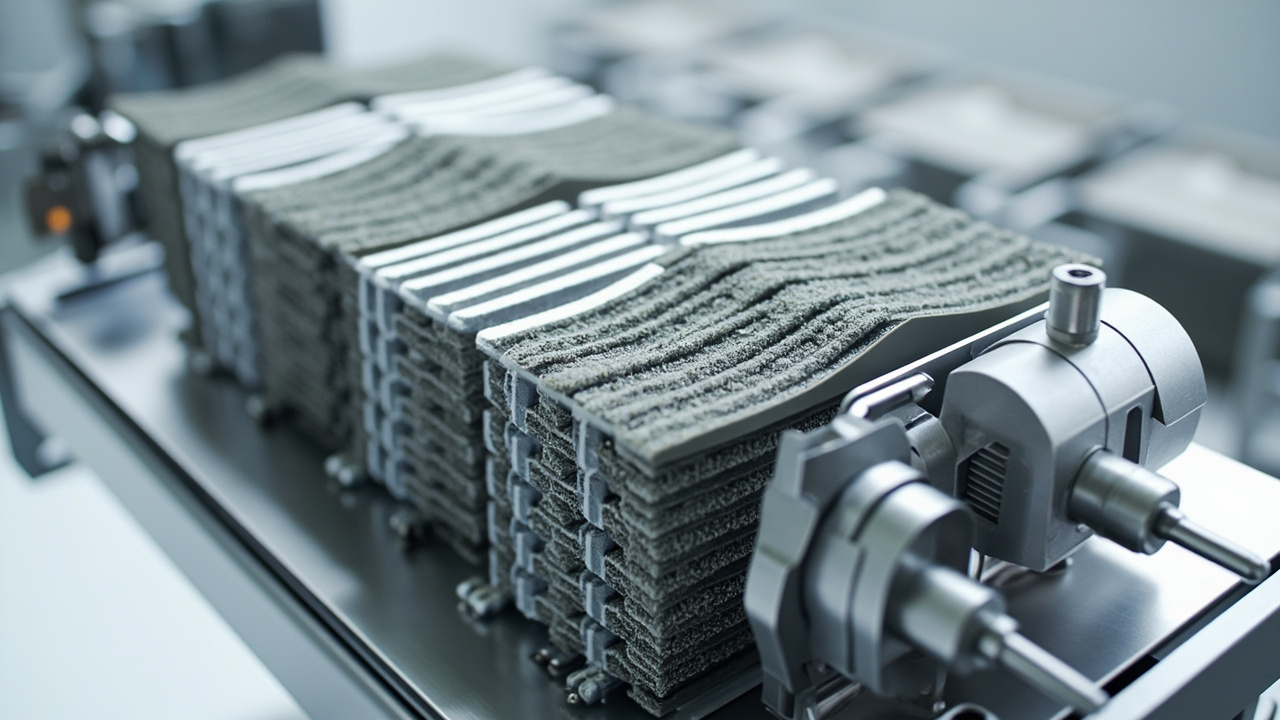
The team then scaled the design to a pilot-scale stack of nine cells, each with an area of 300 square centimeters, according to Nature Energy. Each cell had an area of about half a letter-sized sheet of paper, according to Ars Technica. A blower pushed air through sinuous air channels in the plates sandwiching each cell together, using components borrowed from fuel cells, according to Ars Technica.
Over a 48-hour test, the scaled-up nine-by-300-square-centimeter electrochemical stack achieved an energy cost of 132 kilojoules per mole of carbon dioxide and a flux of 0.19 moles of carbon dioxide per square meter per hour, according to Nature Energy. Those values are equivalent to 0.83 megawatt-hours per tonne of carbon dioxide and 75 kilograms of carbon dioxide per square meter per year, according to Nature Energy.
The larger stack averaged 0.83 megawatt-hours per tonne of carbon dioxide with a pressure drop below 300 pascals, according to RepAir Carbon. The pilot-scale stack meets the 300-pascal pressure-drop requirement for direct air capture, according to Nature Energy. Pressure drop matters when pushing enormous volumes of air through a machine, according to Scienmag.
The small nine-cell device used electricity at a rate of about 0.8 megawatt-hours per ton of captured carbon dioxide, according to Ars Technica. Current facilities capturing carbon from ambient air are in the neighborhood of 1.5 to 3 megawatt-hours per ton, according to Ars Technica. RepAir Carbon said most systems running at scale release captured carbon dioxide using heat and consume 1.5 to 2.5 megawatt-hours per tonne, according to RepAir Carbon.
The paper reports the same low energy consumption at three levels: the University of Delaware laboratory cell, the long-duration RepAir cell, and the larger RepAir stack, according to RepAir Carbon. RepAir Carbon described the peer-reviewed result as using as little as half the energy required by liquid-based systems that dominate direct air capture today, according to RepAir Carbon.
Why energy use determines commercial viability
Energy is the largest operating cost in direct air capture, according to RepAir Carbon. At European industrial heat and electricity prices, conventional heat-driven consumption represents more than 200 euros per tonne in energy alone, according to RepAir Carbon. That amount is several times the current European Union carbon price, according to RepAir Carbon.
The paper was published with the University of Delaware and RepAir Carbon, with results contributed by both organizations, according to RepAir Carbon. RepAir Carbon's technology originated in Professor Yushan Yan's laboratory at the University of Delaware, according to RepAir Carbon. RepAir holds a global exclusive license to the foundational patents and developed durable electrodes, stack hardware, system architecture and integration at its facility in Israel, while Delaware continued independent research on the chemistry, according to RepAir Carbon.
Several researchers on the team are part of a startup called RepAir Carbon that is based on this technology, according to Ars Technica. The company has locations described as Tel Aviv, Luxembourg and Newark, Delaware, according to RepAir Carbon. RepAir has raised 30 million dollars to date and is supported by the European Innovation Council, according to RepAir Carbon.
RepAir calls the building block of its commercial approach the ElectraStack system, according to RepAir Carbon. The cell described in the paper captures and releases carbon dioxide at high purity as it charges and discharges, using the same nickel hydroxide chemistry found in rechargeable batteries, according to RepAir Carbon.
Dry chemistry without solvents or heat
Unlike conventional solid sorbent systems that swing between hot and cold temperatures to grab and release carbon dioxide, electrochemical cells use electricity to drive the capture chemistry, according to Scienmag. That approach promises modular scaling and compatibility with intermittent power sources, according to Scienmag.
RepAir Carbon said every other electrochemical carbon-capture approach still depends on a liquid solvent or electrolyte, according to RepAir Carbon. RepAir described its system as the only carbon-capture technology based entirely on dry chemistry, with no solvents, liquids or heat at any stage, according to RepAir Carbon.
A dry cell has no solvent to degrade, replace or contain, so there is no bespoke chemical plant to build at each site, according to RepAir Carbon. Capture equipment can instead be mass-manufactured and shipped as modules, as solar panels and battery cells are today, according to RepAir Carbon. RepAir Carbon said its technology reduces energy use by 70 percent compared with conventional methods in its company description, according to RepAir Carbon.
Chief Executive Officer and co-founder Amir Shiner said operating cost is energy and that capital cost depends on whether equipment can be built on automated production lines that already exist, according to RepAir Carbon. Shiner said customers ask which carbon-capture technology can prove it will reach the cost target at scale, according to RepAir Carbon.
From 400 ppm air to industrial exhaust
The cell is designed to operate from 0.04 percent to 5 percent carbon dioxide, according to RepAir Carbon. That range starts at ambient-air concentration and extends to diluted industrial emissions. The paper's supplementary information also reports results at 1 percent carbon dioxide, the concentration found in aluminium smelter flue gas, according to RepAir Carbon.
That operating range covers aluminium and copper smelting and gas-fired power generation, according to RepAir Carbon. RepAir Carbon said aluminium and copper smelting are critical to the energy transition and said gas-fired power generation is expanding to meet electricity demand from artificial intelligence, according to RepAir Carbon. Conventional capture struggles in that 0.04 to 5 percent range, according to RepAir Carbon.
RepAir's customers are the operators of those assets, together with carbon-dioxide-removal developers and e-fuel producers that need a reliable carbon-dioxide feedstock, according to RepAir Carbon. The technology works across applications from direct air capture to diluted industrial emissions, according to RepAir Carbon. It is particularly described as effective for post-combustion carbon dioxide from gas turbines, according to RepAir Carbon.
The technology has been selected for direct-air-capture projects on both sides of the Atlantic and is now scaling up, according to RepAir Carbon. RepAir said it has worked with several Tier-1 engineering, procurement and construction companies to confirm its cost roadmap, according to RepAir Carbon.
Path to below $100 per tonne
Part of the Nature Energy paper sketches financial feasibility at scale, according to Ars Technica. The authors estimate the cost for an initial small pilot plant at about 566 dollars per ton of captured carbon dioxide, according to Ars Technica. They use the learning rate from the lithium-ion battery industry and common cost scaling for bigger plants to project forward through pilot generations, according to Ars Technica.
For a plant with 1,000 times the capacity of the pilot, they estimate a cost of 92 dollars per ton of captured carbon dioxide, according to Ars Technica. Nature Energy presents a pathway to below 100 U.S. dollars per tonne on the basis of energy-technology learning rates, according to Nature Energy. RepAir Carbon likewise described a cost pathway from 566 dollars per tonne for the current pilot generation to below 100 dollars per tonne at volume, according to RepAir Carbon.
Targeting 100 dollars per ton has long been the goal in the carbon-capture world because costs that low could spur much wider adoption, according to Ars Technica. That would be much cheaper than has so far been achieved by companies like Climeworks, which is aiming to get down to 250 to 350 dollars per ton by 2030, according to Ars Technica. Climeworks has demonstrated how difficult it can be to meet optimistic scaling projections, according to Ars Technica.
Adding to the number of technologies being pursued may improve the odds that one reaches that goal, according to Ars Technica. The Nature Energy abstract describes electrochemical direct air capture as a potential climate-change solution, according to Nature Energy. The paper is scheduled for the November 2026 print issue of Nature Energy after online publication on September 22, 2026, at 10:00 BST, according to RepAir Carbon.
Sources referenced
- New device captures carbon dioxide by pumping it across a battery - Ars Technica (https://arstechnica.com/science/2026/09/new-device-captures-carbon-dioxide-by-pumping-it-across-a-battery/)
- A Ni(OH)2 symmetric battery cell for hydroxide exchange membrane-based direct air capture of CO2 | Nature Energy (https://www.nature.com/articles/s41560-026-02129-z)