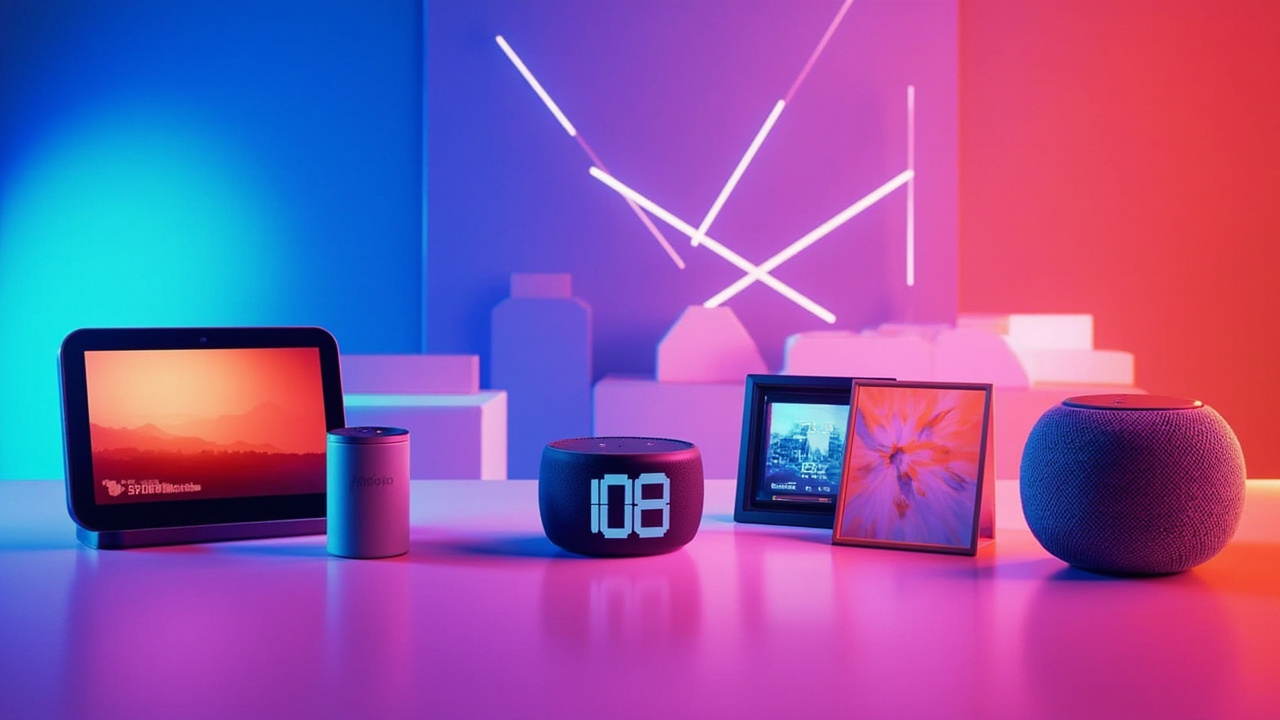
Amazon announced five new Alexa-powered devices on October 28, 2026, headlined by a redesigned Echo Show 16 with built-in Fire TV and a brand-new Echo Time smart alarm clock featuring sleep-sensing technology.
The annual hardware launch, covered in detail by The Verge and corroborated by Engadget, marked one of Amazon's most device-dense events in recent years. From a 16-inch smart display to a photo frame that responds to voice commands, the company pushed deeper into rooms of the home it has not previously targeted.
Echo Show 16: Amazon's Biggest Smart Display Yet
The centerpiece of the October 28 event was the Echo Show 16, a smart display built around a 16-inch screen with Fire TV baked directly into the panel. According to The Verge's roundup of everything announced at Amazon's October 2026 hardware launch, the device also ships with a night vision camera intended for video calls and home security monitoring.
The inclusion of Fire TV inside the display is a meaningful departure from earlier Echo Show models, which required users to switch inputs or use a separate streaming stick to access full streaming functionality. With the Echo Show 16, Amazon positioned the display as a living-room-capable entertainment device that also handles smart home controls, video calls, and ambient information — all from a single panel.
The night vision camera adds a layer of home monitoring that previous Echo Show iterations lacked. Users can check live feeds in low-light conditions without toggling a separate Ring camera app, tightening the integration between Amazon's hardware lines.
Echo Time: An Alarm Clock That Monitors Sleep
Amazon introduced the Echo Time, a bedside smart alarm clock with built-in sleep-sensing technology. As reported by Engadget in its full rundown of everything Amazon announced in October 2026, the Echo Time monitors sleeping patterns and uses that data to inform when alarms trigger, aiming to wake users at a lighter phase of sleep rather than at a fixed time regardless of sleep state.
The device supports customizable alarm sounds and integrates with Alexa routines, so a morning alarm can simultaneously raise smart blinds, start a coffee maker, or read a weather briefing. Amazon designed the Echo Time to blend into bedroom decor, making it distinct from the cylindrical and puck-shaped speakers the company has historically sold.
Sleep-sensing as a consumer hardware feature has been explored by other companies, but embedding it in an Alexa-native alarm clock tethers the capability directly to Amazon's broader smart home ecosystem — meaning the data can feed into routines without requiring a third-party integration.
Alexa Photo Frame: Memories on the Wall, Voice Commands Included
A more unexpected product in the lineup was the Alexa Photo Frame, a 10.1-inch wall-mountable display designed to cycle through personal photo libraries. According to GSMArena's coverage of Amazon's October 2026 launches, the frame accepts voice commands through the built-in Alexa microphone array, letting users ask it to surface specific albums, trigger smart home scenes, or pull up brief information without picking up a phone.
The photo frame category has existed in consumer electronics for years, but integrating a full Alexa voice assistant differentiates Amazon's entry from passive digital frames. The 10.1-inch form factor is compact enough for kitchen walls or bedroom shelves while still displaying photos at a meaningful size.
This device extends Amazon's strategy of embedding Alexa into objects people already place around their homes, reducing the friction of setting up a dedicated smart home controller by turning familiar items — a clock, a picture frame, a display — into ambient computing nodes.
Updated Echo Dot: Now a Smart Home Hub With Eero Wi-Fi
Amazon also refreshed its entry-level Echo Dot, adding two significant features that were previously absent from the compact speaker. The new Echo Dot includes a built-in smart home hub, supporting Zigbee, Thread, and Matter protocols, which means users no longer need a separate hub device to connect compatible smart bulbs, locks, and sensors, according to The Verge's coverage of the October 2026 event.
Perhaps more surprising is the addition of an integrated Eero Wi-Fi extender inside the Echo Dot chassis. Amazon acquired Eero in 2019, and the company has gradually merged Eero's mesh networking technology into select Echo hardware. Placing an Eero node inside the Echo Dot means each additional Dot a household owns can also strengthen Wi-Fi coverage, effectively turning a smart speaker purchase into a network infrastructure upgrade.
Audio performance improvements and enhanced voice recognition rounded out the Echo Dot update. At its typical entry-level price point, the new Dot packs substantially more utility than its predecessors — making it a more compelling on-ramp to Amazon's smart home platform for first-time buyers.
Additional Devices in the October 2026 Lineup
Engadget's comprehensive recap of everything Amazon announced in October 2026 noted the event also touched on updated Kindle and Fire TV hardware, alongside Ring accessory updates, though the Alexa-native devices dominated the announcement slate. Amazon framed the entire lineup around Alexa+, its enhanced AI-powered version of the Alexa assistant, which the company has been rolling out to newer devices as the backbone of more conversational and context-aware interactions.
Alexa+ enables more natural back-and-forth exchanges without requiring wake words at every turn, and Amazon indicated the October 2026 hardware lineup was built with Alexa+ capabilities in mind from the ground up — meaning the new devices are designed to take advantage of the assistant's updated reasoning rather than retrofitting older interaction models.
Why This Hardware Lineup Matters
Taken together, the October 28 announcements represent Amazon targeting every major room of the house with a dedicated Alexa endpoint. The Echo Show 16 anchors the living room. The Echo Time and Alexa Photo Frame address the bedroom and common walls. The Echo Dot with its built-in hub and Eero extender serves as the connective tissue.
The strategy reduces the number of separate devices — streaming sticks, Wi-Fi extenders, smart home hubs, digital photo frames — a user must purchase from different vendors. By collapsing those functions into Alexa hardware, Amazon strengthens the argument for staying within its ecosystem rather than mixing in competing platforms.
For the broader smart home market, the launch raises the feature baseline for what a mainstream, mid-range smart speaker or display is expected to include. Competitors will need to respond to an Echo Dot that now handles mesh Wi-Fi and device pairing out of the box.
The integration of sleep sensing into an alarm clock, meanwhile, signals that Amazon sees health-adjacent monitoring as a growth area for Alexa hardware — a space where it competes not just with Google and Apple but with dedicated wellness device makers.
All five devices were announced on October 28, 2026, with availability details and pricing confirmed through The Verge and Engadget at the time of launch.