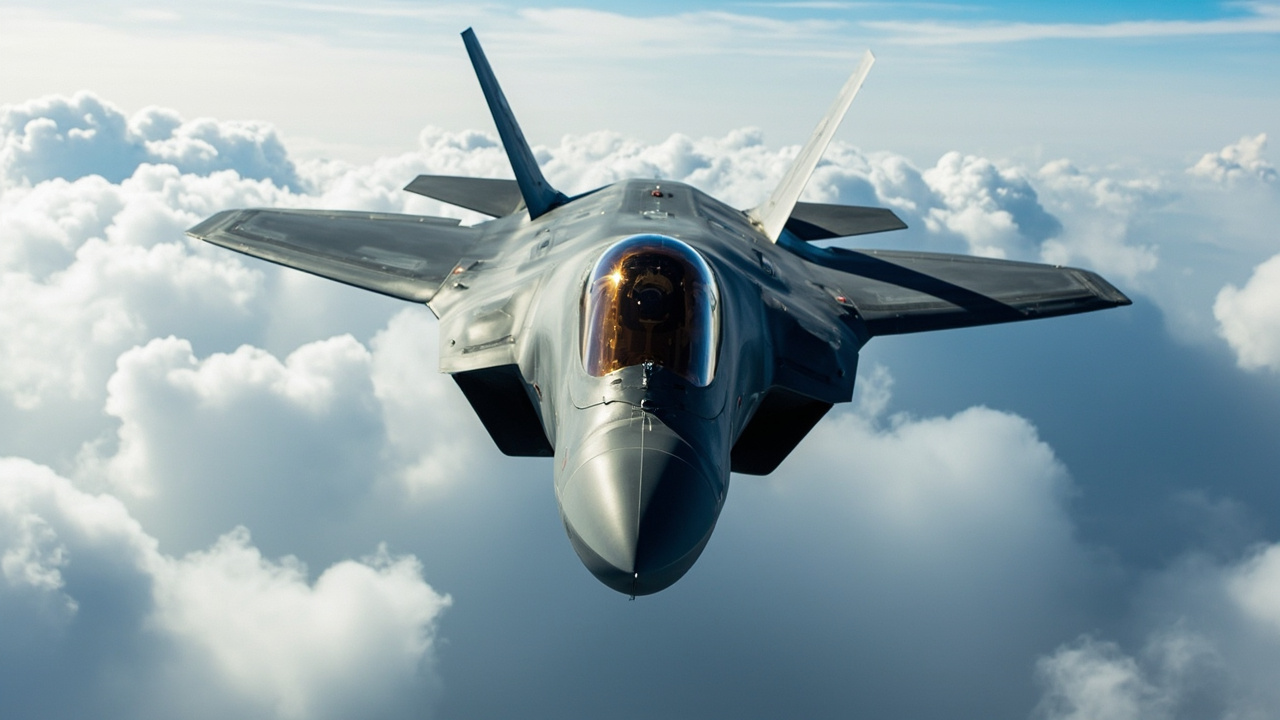
TL;DR: The Pentagon confirmed it is investigating a diverted shipment of unserviceable F-35 parts from Australia and working to get them back after Bloomberg reported the cockpit canopy and weapons-bay door ended up in Chinese possession in Hong Kong.
Pentagon confirms shipment problem and retrieval effort
The Defense Department acknowledged that a load of unserviceable F-35 Lightning II components did not reach its planned destination in the United States, according to CBS News.
A defense official told CBS News that the F-35 Joint Program Office and the Department of War were aware of what the office described as a shipment issue, and that officials were working with U.S. authorities and industry partners to retrieve the components, investigate what happened and add safeguards against a repeat.
The same statement, also described by CNBC and The Hill, said the parts had been moving to the United States from Australia for replacement or repair when the diversion occurred. The Pentagon did not publicly confirm that China now holds the hardware, even as Bloomberg reported on Wednesday, Sept. 24, 2026, that Chinese authorities had obtained the package, according to CBS News and CNBC.
A source briefed on the incident told CBS News that the shipment had been diverted to Hong Kong. The Hill reported that the diversion took place this summer after the hardware was sent from Australia, while CNBC, citing Bloomberg's account from sources, placed the original movement in late May.
The case centers on the F-35 Lightning II, a fifth-generation stealth fighter produced by Lockheed Martin, according to The Hill and CNBC. Washington limits sales of the aircraft to close partners and allies, CNBC reported.
What parts were involved and why engineers care
Multiple reports identified the missing hardware as a cockpit canopy and a weapons-bay door, according to CBS News, CNBC and The Hill.
The canopy is the transparent structure over the cockpit, and Politico had first reported last week that an Australian shipment including a canopy had been diverted to Hong Kong, prompting a congressional inquiry, according to The Hill.
Both parts were described as coated with radar-absorbing material that supports stealth performance, CNBC reported, citing Bloomberg's sources. CBS News reported that even the canopy carries elements of the stealth system because its coating helps the aircraft reduce its visibility to enemy radar.
CBS News reported that, if the parts are the canopy and weapons-bay door, they would not contain the type of advanced avionics that would be most valuable to an adversary. At the same time, the network reported that the hardware could still reveal information about stealth technology.
Australian Defence Minister Richard Marles told reporters on Tuesday, Sept. 23, 2026, that Australia was aware of the shipment and was working with the United States and Lockheed Martin on how Canberra could assist the investigation, CNBC reported. Marles said his understanding was that the missing shipment did not include sensitive parts, according to CNN as cited by CNBC.
The Times of India, summarizing Marles' remarks, reported that the minister described the components as not sensitive equipment and said management of the matter would rest with the United States and Lockheed Martin. The exact condition and service history of the two components were described as unserviceable in the U.S. program-office statement carried by CBS News and The Hill, while The Times of India described the movement as being for repair or disposal.
The carrier was identified as UPS in Bloomberg's reporting as summarized by CNBC and The Hill. CNBC reported that Lockheed Martin, UPS and the Pentagon did not immediately respond to its requests for comment, while the Pentagon's program-office statement was provided to other outlets.
How Australia, Lockheed Martin and Congress entered the inquiry
Australia is one of several countries whose militaries operate the F-35, The Times of India reported. Other operators and buyers named by CNBC included Belgium, Japan, Canada and Singapore, in addition to the United States.
Marles said Australia was working with the United States and with prime contractor Lockheed Martin, The Times of India reported. That triangular relationship — customer nation, U.S. program office and manufacturer — is central because returned, damaged or life-expired components often move through a controlled logistics chain for replacement, repair, inspection or disposal.
In Washington, the disclosure quickly drew bipartisan attention. Sen. Deb Fischer, R-Neb., a member of the Senate Armed Services Committee, told reporters Thursday that she was very concerned about China having possession of F-35 components after their diversion to Hong Kong, according to The Hill. Fischer said she would seek updates from the Pentagon and a briefing when the department had information to share.
Sen. Rick Scott, R-Fla., another member of the Senate Armed Services Committee, also expressed concern, The Hill reported. Scott said China was not going to be America's friend.
On the House side, Rep. Patt Harrigan, R-N.C., a member of the House Armed Services Committee, said that if the reporting was accurate the United States would have a massive problem, according to The Hill. Harrigan said China devoted large resources to penetrating advanced U.S. military technology and that Washington should not ease that task through supply-chain failures.
Sen. Mark Warner, D-Va., vice chair of the Senate Intelligence Committee, said he was seeking a full briefing from the administration on how the parts reached Hong Kong, The Hill reported. Warner called the episode extraordinarily concerning and noted that Hong Kong is an administrative region on China's southern coast.
The Hill reported that Politico's earlier account had already sparked a congressional inquiry over fears that China could gain access to components from the classified aircraft program.
Stealth, security controls and past espionage concerns
The F-35A Lightning II was described by CBS News as the newest version of the aircraft and the most advanced fighter in the U.S. military arsenal, with a speed of up to 1,200 miles per hour and a payload capacity of 18,000 pounds. The Hill reported that there are more than 1,300 of the jets, which feature advanced stealth, supersonic speed, advanced logistical support and the ability to perform strike missions.
The Times of India, citing the Congressional Research Service, reported that more than 1,200 F-35s had been produced, that 19 countries had placed orders, and that the first F-35 Lightning II had rolled off an assembly line in Texas about two decades earlier. The same outlet, again citing the Congressional Research Service, described the aircraft as a fifth-generation fighter incorporating stealth coatings, advanced radar and sophisticated sensor systems.
Control of that technology has shaped past program decisions. CNBC reported that Turkey was removed from the F-35 program in 2019 after it purchased the Russian S-400 air-defense system, amid fears the Russian system could serve as an intelligence-collection platform for learning about the aircraft.
U.S. prosecutors said in 2024 that China had targeted F-35-related U.S. military data in prior espionage cases, CNBC reported. The Times of India also noted a 2013 Defense Science Board report that alleged Chinese cyberattacks had accessed data from dozens of Pentagon programs, including the Joint Strike Fighter program.
Those precedents help explain why lawmakers reacted strongly even though the parts at issue were described as unserviceable. The technical question now is what, if anything, physical access to a used canopy and door could reveal about materials, coatings, fasteners, tolerances and maintenance practices, as distinct from electronics or software. CBS News reported that the parts would not offer advanced avionics but could still provide insight into stealth features.
No U.S. official had publicly detailed the chain of custody through Hong Kong by Sept. 24, 2026, including why the late-May shipment was routed there or who handled it after arrival, according to CNBC's summary of Bloomberg's sourcing. CNBC reported that it was not clear why the shipment was diverted.
Diplomatic timing: Xi visit, Taiwan arms debate and Saudi sale
The reports emerged as Chinese President Xi Jinping was in Washington for a meeting with President Trump, according to CBS News and The Hill.
CBS News reported that it was unclear whether the missing aircraft parts were raised during Xi's Thursday meeting with Trump, although military issues were almost certain to be discussed. The network reported that Xi was expected to press Trump to reduce U.S. support for Taiwan, including halting arms sales to the self-governed island and opposing Taiwanese independence.
That debate involves several specific funding and sales figures. On Wednesday, Sept. 24, 2026, Republican Sens. Mitch McConnell, John Cornyn and Lisa Murkowski wrote to Secretary of State Marco Rubio and Defense Secretary Pete Hegseth about Taiwan security assistance, CBS News reported. The senators asked why the State Department had not obligated $300 million in foreign military financing approved by Congress for 2026 and why the Defense Department had not provided $1 billion appropriated for security cooperation, as well as why the administration had not approved $14 billion in military sales to Taiwan passed earlier in the year.
The senators wrote that the funding was critical to deterrence by denial and said it was confusing for the administration to withhold approvals for purchases it had urged Taiwan to make, CBS News reported. After a May summit, Trump had said he made no commitment either way on a pending Taiwan arms package, while Democratic and Republican lawmakers urged approval, according to CBS News.
A separate proposed F-35 transaction also framed the political reaction. CNBC reported that a $24 billion sale of F-35s to Saudi Arabia had been approved the prior week, with some members of Congress warning about technology reaching China. Rep. Raja Krishnamoorthi, D-Ill., said the intelligence community had warned that the sale could place advanced U.S. military technology within reach of the Chinese Communist Party, CNBC reported.
CNBC also reported that F-35s had been used by the United States during the Iran conflict, with one aircraft sustaining damage from enemy fire, according to the Defense Department. That operational note underscored that the fleet described in the supply-chain inquiry is not only a development program but an active combat asset.
What investigators must reconstruct next
The Pentagon inquiry faces a straightforward logistics puzzle: trace a late-May commercial movement from Australia, identify where routing instructions changed, determine who authorized or executed the change, and establish where the canopy and door went after reaching Hong Kong, based on the accounts carried by CNBC, CBS News and The Hill.
Investigators will also need to establish the parts' identity and status. The program office called them unserviceable, while Marles said they were not sensitive, and Bloomberg's sources emphasized stealth coatings, according to the summaries from CBS News, The Hill and CNBC. Those descriptions are not identical, so recovery and inspection would matter for assessing any technical exposure.
The Hill reported that lawmakers from both parties want briefings as facts develop. Fischer said she would request Pentagon updates, while Warner sought a full administration briefing, according to that outlet.
For now, the confirmed U.S. government position is narrow: officials are aware of a shipment issue, are working with authorities and industry partners to retrieve the hardware, are investigating the incident and intend to add safeguards against another occurrence, according to the program-office statement quoted by CBS News, The Hill and The Times of India. Whether retrieval is possible, and what condition the components are in, remained unresolved in the reporting available by Sept. 24, 2026.
Sources referenced
- Pentagon probing how shipment of F-35 fighter jet parts was diverted - CBS News (https://www.cbsnews.com/news/pentagon-f-35-fighter-jet-parts/)
- Chinese authorities reportedly in possession of F-35 components in HK - CNBC (https://www.cnbc.com/2026/09/24/chinaf-f35-components-hong-kong.html)