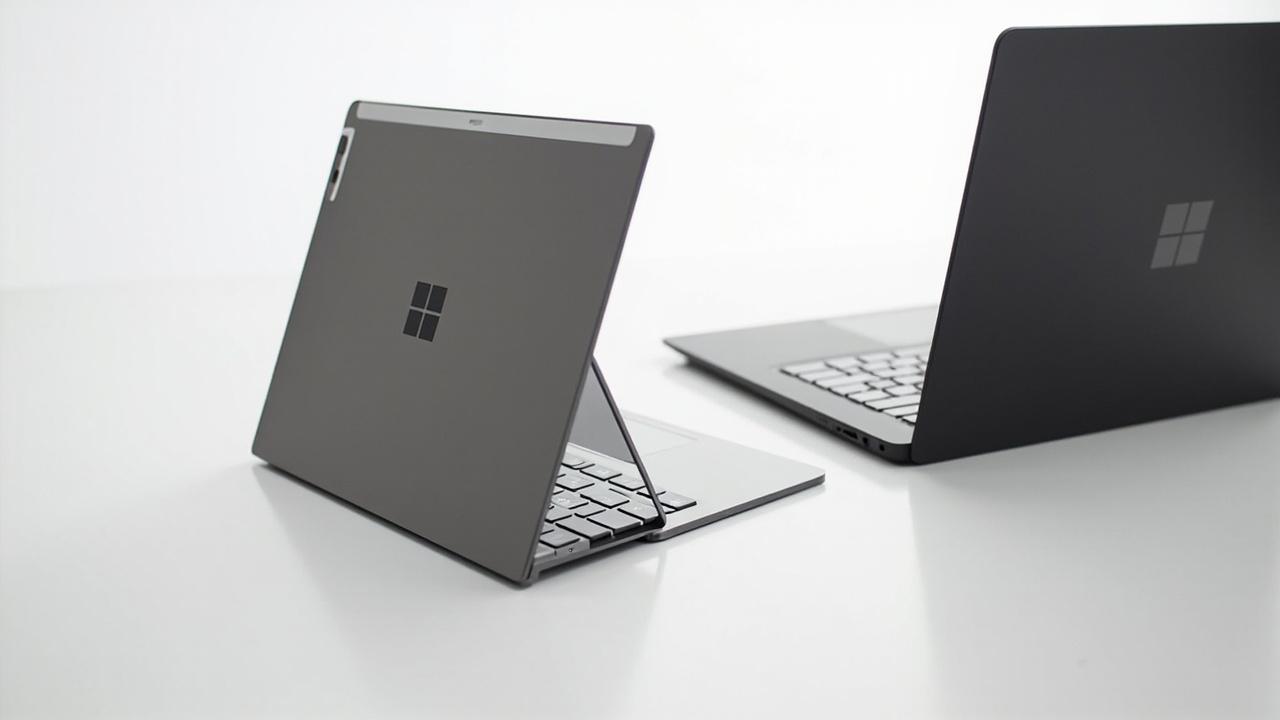
TL;DR: Microsoft refreshed its smallest Surface PCs with Qualcomm's six-core Snapdragon X2 Plus on September 23, 2026, promising faster graphics and AI with brighter displays at higher starting prices ahead of an October 13 release.
New chips arrive in familiar bodies
Microsoft introduced second-edition versions of the Surface Pro 12-inch and Surface Laptop 13-inch on September 23, 2026, built around Qualcomm's Snapdragon X2 Plus processor.
The announcement was timed with Qualcomm's Snapdragon Summit, according to the Microsoft Devices Blog, and it keeps the same lightweight designs from last year while changing the internal platform.
Both machines use a six-core Snapdragon X2 Plus with a Qualcomm Adreno GPU, according to Tom's Hardware. Tom's Hardware also reports that the chip includes an 80 TOPS NPU for on-device AI work.
Microsoft engineers worked with Qualcomm Technologies during silicon development on sustained performance, efficient power use, quiet thermals and responsive on-device AI for thin and light PCs, according to the Microsoft Devices Blog.
The company frames the update as more than a processor swap because Windows, Copilot and Microsoft 365 experiences are intended to run across device, cloud or both for lower latency and less dependence on cloud calls, according to the Microsoft Devices Blog.
Both refreshed PCs will be available starting October 13 in select markets, according to the Microsoft Devices Blog. The same date applies to commercial availability through Surface for Business, according to the Microsoft Devices Blog.
Prices rise as base memory doubles
The Surface Pro 12-inch starts at $1,149.99 MSRP, according to the Microsoft Devices Blog. The Surface Laptop 13-inch starts at $1,199 MSRP, according to the Microsoft Devices Blog.
That is a substantial increase from the prior generation, which started at $799 for the Pro and $899 for the Laptop when those versions launched, according to Tom's Hardware. Coverage by The Verge puts the prior starting prices at $799.99 and $899.99 and the new Laptop starting price at $1,199.99.
The increase is tied in part to memory. There is no base 8GB model this time, according to The Verge. Both devices launch with a minimum of 16GB of RAM and can be configured up to 24GB, according to The Verge.
Tom's Hardware lists the memory as 16GB to 24GB of LPDDR5x RAM on both systems. Storage options are listed as 256GB and 512GB UFS on both systems, according to Tom's Hardware.
The Verge attributes part of the higher price tag to memory-market pressure. Engadget likewise describes the increase as connected to the broader rise in memory costs affecting the industry.
For buyers comparing generations, the practical change is straightforward: the entry price is higher, but the entry configuration now includes twice the minimum memory of the previous 8GB base, according to The Verge.
What Microsoft claims for speed and efficiency
Microsoft says the Snapdragon X2 Plus systems deliver up to 18 percent more efficient battery performance, according to The Verge. The company also promises more than 60 percent faster graphics performance and up to 95 percent faster local AI inferencing on the built-in NPU, according to The Verge.
The Microsoft Devices Blog lists a similar set of generational gains: up to 17 percent faster in Office productivity workloads, up to 18 percent more efficient battery performance, more than 60 percent faster graphics performance, and up to 95 percent faster local AI inferencing on the NPU.
Tom's Hardware reports the Office claim as 17 percent faster in Microsoft Office workloads compared with previous-generation Snapdragon X Plus processors. Engadget reports the Office figure as 18 percent faster for basic productivity work.
Peak figures aside, the Microsoft Devices Blog emphasizes sustained use, describing hour six with many tabs open, a call running and something rendering while the machine remains calm and quiet.
For everyday work, Microsoft says the Pro feels more responsive for summarizing notes, editing photos and annotating designs, according to the Microsoft Devices Blog. For the Laptop, Microsoft says the Snapdragon X2 Plus keeps streaming video and presentation design feeling smooth, according to the Microsoft Devices Blog.
Battery life gains in hours
On web browsing, the Surface Pro 12-inch Second Edition gains an extra hour, for up to 13 hours in total, according to The Verge. The Surface Laptop 13-inch Second Edition gains two extra hours of web-browsing use, for up to 18 hours in total, according to The Verge.
The Microsoft Devices Blog separately describes the Pro as adding an extra hour of active web browsing. For the Laptop, the Microsoft Devices Blog lists 22.5 hours of battery life, a figure that reflects a different usage measure than web browsing.
Engadget notes that portability, rather than raw power, remains the central goal for Microsoft's smallest PCs. Tom's Hardware frames the two machines as the company's lowest-end computers receiving long-awaited processor upgrades.
The Pro remains a thin, light and fanless Windows PC, according to the Microsoft Devices Blog. That fanless design puts particular importance on efficient power use and quiet thermals, areas Microsoft says were addressed during joint work with Qualcomm, according to the Microsoft Devices Blog.
Displays get brighter, resolutions stay put
Both models keep similar displays to last year but raise brightness, according to The Verge. Each moves from 400 nits to 500 nits, according to The Verge.
That is a 25 percent brighter display generation-over-generation, according to the Microsoft Devices Blog and Engadget. Tom's Hardware likewise reports 25 percent brighter displays on both systems.
The Surface Pro 12-inch has a 2196 x 1464 LCD display at 220 PPI that runs at up to 90Hz, according to The Verge. Tom's Hardware lists the same resolution and 3:2 aspect ratio, with up to 90Hz operation and a 60Hz default, plus touch support and 500 nits maximum brightness.
The Surface Laptop 13-inch ships with a 1920 x 1280 display at 178 PPI that runs at 60Hz, according to The Verge. Tom's Hardware lists the same 13-inch size, 1920 x 1280 resolution, 3:2 aspect ratio, 60Hz refresh rate and 500-nit maximum.
The Pro display is described as a PixelSense touchscreen, according to the Microsoft Devices Blog. The Laptop display is described as a taller 3:2 PixelSense touchscreen, according to the Microsoft Devices Blog.
Design, ports and wireless stay familiar
Design-wise, nothing has changed with either device, according to Engadget. The Surface Pro 12-inch remains a small 12-inch tablet with a kickstand, according to Engadget.
The Laptop remains a basic notebook design reduced to a 13-inch screen and 2.7-pound frame, according to Engadget. The Microsoft Devices Blog describes it as a thin, light Windows PC with a full-size backlit keyboard, precision touchpad and premium aluminum body.
Port selection remains the same, according to The Verge. Both devices include two USB-C 3.2 ports, according to The Verge.
The Surface Laptop 13-inch also has a USB-A 3.2 port and a 3.5mm headphone jack, according to The Verge. Both support Wi-Fi 7 and Bluetooth 5.4 connectivity, according to The Verge.
The Verge notes surprise that Microsoft did not add a haptic trackpad to at least one smaller Surface, especially as Windows 11 adds subtle haptic nudges and the Surface Laptop Ultra already ships with haptic feedback.
Microsoft is bringing back black for both smaller Surfaces, with platinum silver or violet colors also available, according to The Verge. The Microsoft Devices Blog describes the new Black color as adding choice alongside greater display clarity.
The Pro enclosure is made with 86 percent recycled content, according to the Microsoft Devices Blog. The Laptop is built around everyday details including keyboard, touchpad, aluminum body and touchscreen proportions, according to the Microsoft Devices Blog.
Pro versatility and the keyboard question
The Surface Pro 12-inch is described as the most portable and versatile Surface Pro made by the company, according to the Microsoft Devices Blog. It moves from tablet to laptop use when the Surface Pro 12-inch Keyboard is attached for writing, coding or responding to email, according to the Microsoft Devices Blog.
The keyboard costs $150 and is sold separately, according to Engadget. Engadget characterizes separate keyboard sales as a longstanding Microsoft approach.
The Pro supports the magnetically stored Surface Slim Pen for sketching rather than typing when that is easier, according to the Microsoft Devices Blog. Engadget recalls the 12-inch tablet as compact in last year's review and expresses hope that the new internals address prior performance concerns.
For customers who bought last year's systems, Engadget suggests waiting longer before upgrading. For shoppers needing more power, Engadget notes that the larger 13-inch Surface Pro and 13.8-inch Surface Laptop are also available with newer Snapdragon X2 chips at higher prices.
The Microsoft Devices Blog positions the Pro for summarizing notes, editing photos and annotating designs with more responsiveness. It also presents the device as intended for work that moves between locations.
Ink Canvas debuts as a pen-first AI app
The Surface Pro 12-inch introduces Microsoft Ink Canvas, according to the Microsoft Devices Blog. The company describes it as an AI-powered, pen-first experience for sketching, annotating, generating images and summarizing text directly on the canvas.
Ink Canvas is built for the moments before an idea becomes a document or prompt, according to the Microsoft Devices Blog. It lets customers use Slim Pen to express intent visually, spatially and in handwriting, giving Copilot richer context, according to the Microsoft Devices Blog.
The app will be pre-installed on the new Pro 12-inch, according to the Microsoft Devices Blog. It will also be available to download from the Microsoft Store on other supported Surface and Windows devices on October 13, according to the Microsoft Devices Blog.
Tom's Hardware describes Ink Canvas as a new sketching and annotating app for Windows 11 that comes preinstalled on the new tablet and reaches other supported Windows 11 devices through the Microsoft Store. Engadget says the concept does not sound particularly unique but gives Slim Pen users another activity.
The timing matters for pen owners because the Store release arrives the same day the new hardware becomes available, according to the Microsoft Devices Blog.
Surface Mouse adds haptics
Microsoft also introduced Surface Mouse, according to the Microsoft Devices Blog. The new mouse is designed to make everyday interactions feel more precise through haptic feedback, according to the Microsoft Devices Blog.
The haptic response adds a small physical signal when a click registers, a window snaps into place or an object aligns, according to the Microsoft Devices Blog. The company describes the effect as subtle by design but noticeable within seconds, according to the Microsoft Devices Blog.
The mouse has a redesigned ambidextrous shape for comfortable all-day use, according to the Microsoft Devices Blog. It includes a customizable action button for Copilot and everyday shortcuts, according to the Microsoft Devices Blog.
Connectivity is Bluetooth 6.0 for pairing with multiple devices and moving between them, according to the Microsoft Devices Blog. Tom's Hardware reports that the pointer uses two AAA batteries and comes in black and platinum.
Surface Mouse starts at $79.99 and will be available in Black and Platinum beginning October 13 in select markets, according to the Microsoft Devices Blog. Engadget rounds the price to $80 and describes the device as an evolution of the previous Surface Mouse.
Tom's Hardware notes that haptics previously appeared on some Surface notebooks and can take advantage of Windows 11 features for actions such as hovering, resizing windows or receiving button feedback. Engadget compares the approach to the Logitech MX Master 4, while emphasizing that Microsoft's pointer is ambidextrous.
The Microsoft Devices Blog says the mouse is made with 30 percent recycled content, including the most post-consumer recycled plastic of any Surface mouse. That sustainability detail accompanies the Pro's recycled-content enclosure as part of the broader refresh.
Business versions and 5G option
The new Pro, Laptop and Mouse will also be available to commercial customers through Surface for Business beginning October 13, according to the Microsoft Devices Blog.
The Pro 12-inch will also offer an optional 5G configuration, according to the Microsoft Devices Blog. That option is described as one of the most requested additions to the form factor and is aimed at helping mobile teams stay connected.
Tom's Hardware reports that optional 5G connectivity on the 12-inch Pro will be limited to enterprise versions of the device. The Verge likewise reports that the Surface Pro 12-inch will be available in an optional 5G configuration alongside sales to commercial customers.
The business release therefore mirrors the consumer release date while adding a cellular choice for organizations with mobile workers, according to the Microsoft Devices Blog.
For IT buyers, the practical lineup is two portable PCs plus a haptic mouse, all arriving the same day, with memory starting at 16GB and storage at 256GB or 512GB, according to Tom's Hardware and the Microsoft Devices Blog.
Why this refresh matters now
The smaller Surface devices were ostensibly low-cost PCs last year, with launch prices below $1,000, according to Engadget. The new starting prices of $1,150 for the Pro and $1,199 for the Laptop move them into a different value conversation, according to Engadget.
The Verge uses the term RAMageddon to explain part of the price pressure. Engadget uses the variant RAMaggedon to describe the memory-cost environment behind the increases.
Performance expectations are also different. The prior models used slower Qualcomm chips, and Microsoft now claims improvements across productivity, graphics, battery efficiency and NPU-based AI inferencing, according to Engadget and the Microsoft Devices Blog.
For shoppers interested last year but concerned about a speed downgrade from the previous Snapdragon X chips, Engadget calls the new upgrades compelling. For recent buyers, the same outlet advises patience rather than an immediate second purchase.
Ultimately, Microsoft is betting that lighter travel, brighter screens, longer browsing time and faster on-device AI justify higher entry prices for its most portable Windows PCs, according to the Microsoft Devices Blog, The Verge and Engadget.
Sources referenced
- Microsoft Devices Blog - Introducing the next Surface Pro 12-inch and Surface Laptop 13-inch with Snapdragon X2 Plus (https://blogs.windows.com/devices/2026/09/23/introducing-surface-pro-12-inch-and-surface-laptop-13-inch-with-snapdragon-x2/)
- The Verge - Microsoft refreshes its smaller Surface Pro and Laptop with Qualcomm’s X2 Plus (https://www.theverge.com/news/999195/microsoft-surface-pro-12-inch-surface-laptop-13-inch-qualcomm-x2-plus)