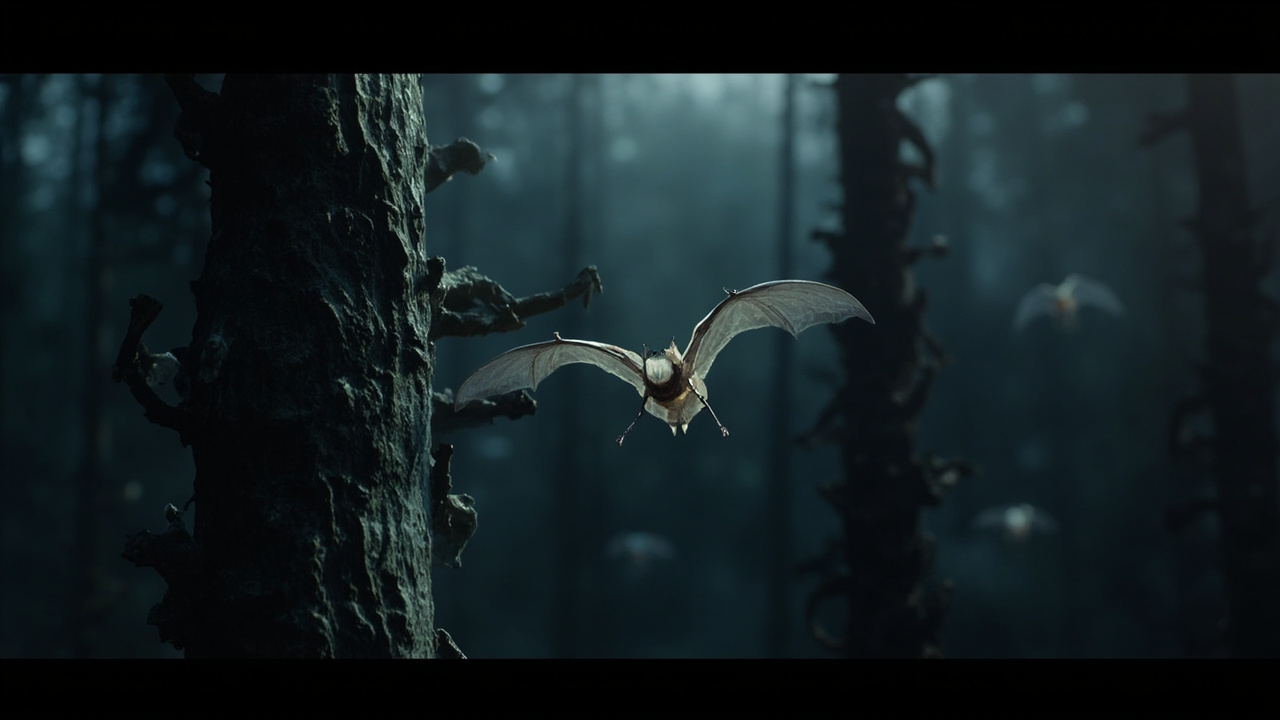
TL;DR: Bats first evolved in Europe about 65 million years ago, according to the largest combined genome-and-fossil study of bats published in Nature.
The most complete evolutionary history of bats ever assembled now points to a European origin about 65 million years ago, in the aftermath of the asteroid impact that ended the age of dinosaurs, according to Reuters.
The work is described as the largest combined bat genome and fossil study ever conducted, according to Reuters. It concludes that flying mammals appeared in Europe about a million years after an asteroid struck Earth 66 million years ago, then spread worldwide, rather than originating in North America, Asia or Africa as previously hypothesized, according to Reuters.
Researchers assembled the largest collection of high-quality bat genomes to date, covering 103 species representing all 21 recognized families of bats, according to Reuters. They integrated that genomic data with an analysis of 44 fossil bats to decipher evolutionary relationships and generate a bat family tree, according to Reuters.
The study was published this week in the journal Nature, according to Reuters. Leadership included Sonja Vernes, a professor of biology at the University of St Andrews in Scotland, Emma Teeling, a zoology professor at University College Dublin, and Liliana Davalos, an evolutionary biologist at the State University of New York at Stony Brook, according to Reuters.
Data from the project have been made publicly available around the world, according to CBC News. Vernes said she was excited to see what researchers could learn from bat genomes for application to human health, according to CBC News.
How scientists built the bat family tree
The team sequenced genomes from 103 bat species, analyzed traits and genes, compared them with 44 bat fossils and used what Vernes called a complicated advanced computational method, according to CBC News. Genome and anatomical data together helped identify the origination date of bats, even though the oldest-known bat fossils date to approximately 52 million years ago, according to Reuters.
The effort completed phase 1 of the Bat1K project, including 103 chromosome-level genome assemblies and annotations representing at least one species from each of the 21 currently recognized bat families, according to RNZ reporting of the Reuters account. The new family tree shows how the 21 families are related to one another, according to CBC News.
Vernes is director of the Bat1K consortium behind the study, according to CBC News. She and Teeling decided 10 years ago that they wanted to sequence the genomes of every bat on Earth because of the animals' biological distinctiveness and ecological importance, according to CBC News.
The collaboration involved 600 researchers around the world, according to CBC News. That group included 137 co-authors from 64 countries on the new paper, including contributors from Canada, according to CBC News.
Burton Lim, assistant curator of mammals at the Royal Ontario Museum, supplied about a third of the samples for genome testing in the study, according to CBC News. Most of those species came from tropical South America and Southeast Asia, according to CBC News. Lim collected bats using mist nets hung over rivers and the entrances of caves, according to CBC News.
Lim's favourites among the sampled animals were sheath-tailed bats of Central and South America, according to CBC News. Those bats can adjust the membrane between their hind legs to help them manoeuvre during flight, according to CBC News. Lim said they were harder to net because they fly high, according to CBC News.
Fossils were too sparse on their own to answer where bats originated, according to CBC News. Vernes noted that because bats fly, they have dispersed and crossed the planet for millions of years, complicating biogeographic reconstruction, according to CBC News.
Why Europe emerged as the origin
The analysis indicates that bats first appeared in Europe about 65 million years ago, according to Reuters. That timing places their emergence about a million years after the asteroid impact 66 million years ago that doomed the dinosaurs and enabled mammals to become the dominant land animals, according to Reuters.
Europe had not been the leading hypothesis in earlier debates, according to CBC News. Scientists had previously debated whether bats could also have come from Asia, Africa or North America, according to CBC News.
The new result rejects those alternative regions as the site of first appearance, according to Reuters. Bats arose after the mass extinction that doomed dinosaurs, according to Reuters.
Relatively soon after appearing in Europe, bats reached Africa, according to Reuters. Davalos said those two continents formed a hub of early bat evolution, according to Reuters.
The reconstruction found that ancient bats had 26 chromosomes and first evolved around 65 million years ago, after dinosaurs died out and many mammals started diversifying, according to CBC News. Antarctica is the lone continent bats never inhabited, according to Reuters.
Today there are more than 1,500 bat species living around the world, according to Reuters. They account for more than a fifth of the world's mammal species, according to Reuters. CBC News likewise reported 1,500 species representing about a fifth of living mammal species, according to CBC News.
Bats are critical players in global ecosystems, according to Reuters. They pollinate plants, disperse seeds and eat huge numbers of insects, according to Reuters. They are one of only three lineages of flying vertebrates in Earth's history, according to Reuters.
Flight and echolocation came early
The researchers concluded that, like flight, echolocation evolved near the dawn of bat evolution, according to Reuters. Echolocation is the biological sonar system many bats use to navigate in the dark and catch flying prey, according to Reuters.
The analysis shows that the fossil bat Vielasia, which lived 50 million years ago and has a bone structure that showed it could echolocate, was part of the oldest branch in the bat family tree, according to CBC News. Another fossil discussed in coverage, Palaeochiropteryx tupaidon, found in Germany, lived 47 to 48 million years ago, according to CBC News.
Bats use echolocation by making high-frequency ultrasonic sounds and listening to returning echoes bouncing off objects to chart their surroundings, according to Reuters. The ability can be recognized in fossils based on anatomical traits such as an enlarged cochlea and specialized middle ear structures, according to Reuters.
Vernes said the combination of flight and echolocation opened opportunities to move into new niches, including hunting at night when there is less competition and fewer predators, according to Reuters. She summarized the division as flight getting bats into the air and echolocation letting them own the night, according to Reuters.
Teeling said echolocation allowed bats to become nocturnal and not compete with birds or be preyed on by day-active birds, according to Reuters. The study's leaders linked nocturnality to reduced competition and reduced predation risk, according to Reuters.
It remains unclear whether flight or echolocation evolved first, according to Reuters. The oldest bat fossils show both flight and echolocation capabilities, which does not resolve the order, according to Reuters. Teeling said researchers need to find the oldest pre-bats, or transition fossils, and examine whether they had anatomical characteristics indicative of flight or echolocation, according to Reuters.
What powered flight required
Bats are the only mammals to have achieved powered flight, according to Reuters. They join the flying reptiles called pterosaurs and birds as the only vertebrates to do so, according to Reuters.
Birds survived the asteroid impact, but pterosaurs did not, according to Reuters. The pterosaur extinction may have opened ecological niches that a new lineage of flying vertebrates could fill, according to Reuters.
Bat wings are built differently than those of birds and pterosaurs, according to Reuters. They are modified forelimbs featuring greatly elongated fingers that support a large skin membrane, according to Reuters.
What the ancestors of bats looked like remains a mystery, according to Reuters. Teeling offered a guess that they looked like tree shrews starting to grow long fingers, while cautioning that it was only a guess because all of the oldest fossils look like modern bats, according to Reuters.
What early bats were like
The study uncovered traits of the earliest bats beyond geography and age, according to CBC News. The chromosome finding points to an ancestral complement of 26 chromosomes, according to CBC News.
Early development of echolocation is supported by the placement of Vielasia on the oldest branch, according to CBC News. That animal's bone structure indicated echolocation ability 50 million years ago, according to CBC News.
The German fossil Palaeochiropteryx tupaidon provides a younger reference point at 47 to 48 million years ago, according to CBC News. The much older inferred origin at 65 million years therefore extends well beyond the approximately 52-million-year age of the oldest-known bat fossils, according to Reuters.
CBC News reported that Vernes spoke from Cyprus, where she was studying tiny bats called Miniopterus in local sea caves, according to CBC News. Her laboratory work includes pale spear-nosed bats originally from Trinidad and Tobago, according to CBC News. That laboratory population is used to study how bats learn vocal communication, according to CBC News.
Vernes said she is drawn to bats in part because they are one of the only mammals in which babies have to learn how to speak from adults, making them similar to humans in that respect, according to CBC News. Her own research focuses largely on vocal learning in pale spear-nosed bats in her laboratory at the University of St Andrews, according to CBC News.
Teeling and Vernes framed the decade-long sequencing ambition as an effort to harness genomics to understand what makes bats distinctive and what they do for the planet, according to CBC News. The resulting open dataset is intended to support further work on evolution, health and ecology, according to CBC News.
Bats today: size, diet and family diversity
Bats today come in many shapes and sizes, with differing diets and lifestyles, according to Reuters. The largest is the giant golden-crowned flying fox of the Philippines, with a wingspan of 5-1/2 feet, or 1.7 meters, according to Reuters. The smallest is the bumblebee bat of Thailand and Myanmar, with a wingspan of about 5 inches, or 13 cm, according to Reuters.
Many bats are insectivores, according to Reuters. Others consume fruit, nectar, fish and, in the case of vampire bats, blood, according to Reuters.
The present-day array includes horseshoe bats, according to Reuters. It also includes leaf-nosed bats, according to Reuters. Mouse-tailed bats are among the named groups, according to Reuters. Trident bats are another example, according to Reuters. Ghost-faced bats are included in the перечисление, according to Reuters. Mustached bats add to the diversity, according to Reuters. Sucker-footed bats are part of the same broad radiation, according to Reuters. Hammer-headed bats illustrate differences in head shape, according to Reuters. Wrinkle-faced bats complete the list highlighted in the report, according to Reuters.
Diaemus youngi, a bat found in Suriname in South America, was one of the species contributed to the Bat1K project by Lim, according to CBC News. Lim's contributed samples emphasized tropical regions where bat diversity is high, according to CBC News.
The new family tree clarifies relationships among all 21 modern families, according to CBC News. That framework replaces uncertainty created by worldwide dispersal and a limited fossil record, according to CBC News.
Longevity, disease resistance and human health
Many bat species show remarkable resistance to disease and live exceptionally long lives for their size, according to Reuters. The study lays the groundwork for research into the genetic basis of those traits, according to Reuters.
Bat researchers have long asked why bats live so long for their size and resist viral diseases unusually well, according to CBC News. Bats can live up to 40 years, compared with only a couple of years for similar-sized animals like mice, according to CBC News.
Teeling said the work could eventually inform human research into aging, immunity and disease resistance, according to Reuters. Vernes said she was excited about what bat genomes might teach researchers for human health applications, according to CBC News.
Vernes suggested that the findings might eventually help produce bat-inspired health-care treatments, while acknowledging that such applications would not arrive in the immediate future, according to CBC News. The near-term value is the public genomic resource and the revised evolutionary framework, according to CBC News.
Vernes added a broader assessment of the animals' evolutionary importance, according to Reuters. She called bats one of evolution's greatest experiments and said they constantly surprise researchers, according to Reuters.
Sources referenced
- Study reveals evolutionary history of bats, dating back 65 million years | Reuters (https://www.reuters.com/science/study-reveals-evolutionary-history-bats-dating-back-65-million-years-2026-09-24/)
- Where did bats come from? Family tree drawn from huge genetic study | CBC News (https://www.cbc.ca/news/science/bat-genome-bat1k-9.7355461)